Quand un vieillard meurt, une bibliothèque brûle.*
January 3, 2025 was my last day of work .Twelve days before my 67th birthday, I retired from a 40+year career that spanned basic research in physical chemistry, university teaching, and academic administration. There were several factors that led to me to this decision. A number of my younger colleagues were looking for advancement and the longer I sat in the Provost’s chair, the fewer opportunities they had. I felt that I had my turn and that I should to get out of the way and make room for the next generation of academic leadership. Perhaps most compelling, a very close friend, several years younger than me, had a harrowing bout with ovarian cancer, which brought her from working 60 hours per week to the grave within a few months. In my grief, I realized that I did not want that to be my story. I wanted time. My husband had retired a couple years prior and I wanted time with him. I wanted adventure. I wanted to see Antarctica, Mt. Everest, the Scandinavian fjords, and the Serengeti. I wanted to read the enormous stack of books on my “to-read” list. I wanted to try all sorts of new things. I wanted to turn off the damn alarm clock. So, with high expectations, I retired.
And the universe rolled her eyes and let out a ear splitting belly laugh.
Months later I found myself despondent, feeling deep loss.
This wasn’t entirely unreasonable.
My husband, who had undergone successful cancer surgery 2 years prior to my retirement, learned in February that the cancer had returned. A number of tests were performed and the recommended course of treatment was 8 weeks of daily radiation treatments which occurred over the summer. As 2025 ended, we were anxiously awaiting the results. (Spoiler: the treatments were successful. Whew!)
In March, my older sister’s long battle with COPD entered a new phase. She was bedridden and needed supplemental oxygen twenty-four hours per day. She moved into Hospice care and continued to decline, slowly at first and then dramatically. She passed away, in her own home, in early August.
Less tangible was the loss of structure, loss of purpose. I have always said that working at a university, whether as faculty member or an administrator, was not a job, it was a lifestyle. Higher education had changed my life as a young woman, and in my various faculty and administrative roles, I saw how it changed the lives of decades of students. I NEVER doubted that my work was important, or that our work at the university made a difference. I was never bored. I was focused, believed in our mission, and gave it my all. My work bled into my very being and I couldn’t quite fathom who I was without it.
Added to all of that was my growing horror at the direction of my country. I was frustrated by misinformation and disinformation, and appalled at the cruelty, incompetence, divisiveness, and destructiveness of my nation’s leaders. Chainsaw management was not and is not a winning strategy.
As the year progressed, there were most definitely bright spots: a hiking trip to Utah; two long weekends on the beautiful coasts of Lake Michigan and Lake Superior; a visit with a close friend, two trips to the east coast to visit our beloved children; a few days in NYC; a sweet new puppy. The very best news, by far, was that we will be grandparents for the first time in March of 2026.
But, during this year, freed from a very demanding schedule, I had a lot of time to think. The experiences of the last year led me, for the first time, to consider my own mortality. Historically, the women in my family live to be somewhere between 77 and 100 years old, so I am at least in my last trimester and perhaps even in my last decade. I began to wonder about my legacy and what I will leave behind.
“My Cabinet of Curiosities” is a semi-organized collection of bits and pieces –family histories, stories, essays, poems, and images that provide a window into my life, my experiences and the wider world in the latter half of the 20th century and first half of the 21st.
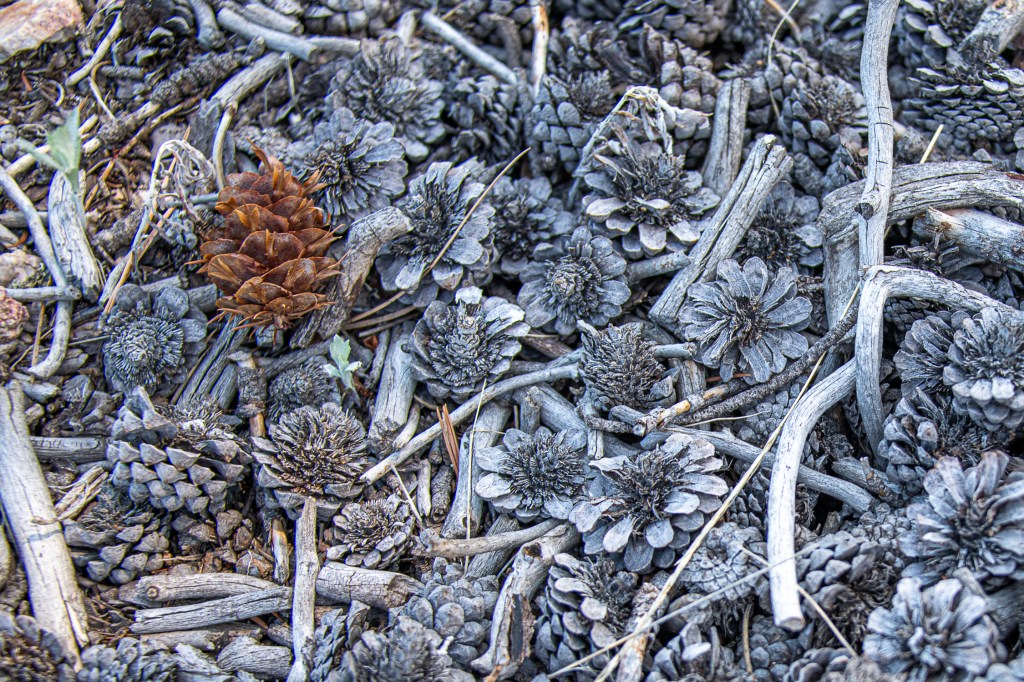
In western Africa, when an old person dies, they say that their library has burned down. This collection exists so that when my corporeal self is gone, my library can remain. And perhaps, my library will provide insights, joy, and maybe even inspiration to any intrepid explorer who wanders through these rooms.
*(When an old man dies, a library burns) Amadou Hampâté Bâ, Malian writer at UNESCO, 1960
Send comments
(include email if you want a response)


 My Cabinet of Curiosities