I once found myself standing on the edge of a rickety platform high up in a tree in the Costa Rican rainforest. The guide had just attached my harness to the zip line cable with an ominous metallic click. Far above the forest canopy, I looked out over the tops of the trees and gauged the depth of the gorge below. Knees trembling, I stepped back.
Ever so sweetly, I snarled at my husband “Al! Who’s stupid idea was this anyway? Let’s go back.”
Calmly, as always, he replied, “Yours. Your turn. Now go.”
I took a deep breath and reminded myself that people go zip lining every day and almost no one dies in the process. With statistics on my side, I stepped off the platform. The fear quickly dissipated, replaced by the exhilaration of flying.
This was not the first or the last time that my ideas seemed amazing in the planning stage but genuinely stupid upon implementation. It was not the first or last time that Al needed to give me that extra push. It was not the first or the last time that the experience was worth the fear and anguish.
Seven years after flying through that rainforest, I hatched a plan to visit Peru. Time in Lima, time in the Amazon rainforest, but most importantly, a few days hiking in the Andes to see Machu Picchu. I was 59 years old. I was neither sedentary nor athletic, but especially not athletic. Somehow, I felt ready to tackle the Andes– really big mountains.
REALLY.
BIG.
MOUNTAINS.
We booked our trip through an Australian agency called Intrepid Travel that provided the following description (and I quote) “The trip is recommended for those with a moderate level of fitness”
Dear Intrepid Travel, “Moderate Level of Fitness” may need further definition. Just a thought.
We called our then twenty-something year-old kids, Eric and Ellen, and told them of our plans and that we’d probably be out of cell phone range for a while. Eric said, “Great, have fun!” Ellen, the planner, seemed to think that we were foolhardy and likely to die. People do, you know.
******************************************************************************************************
Our Andes trek began with a flight to Cusco, the ancient Incan capital. Cusco is situated high in the mountains and approaching the runway between the imposing peaks gave us our first experience of the enormity of the Andes. At an elevation of 11,000 feet, this beautiful city is a common location for all sorts of intrepid hikers to adjust to the altitude.
It was in Cusco that we learned that many people don’t acclimate well to such high elevations. It seems that most people bring a prescription medication that prevents altitude sickness. Who knew? Apparently, everyone else in our tour group. Maybe we should have done some research. I am a scientist, after all. But by then it was too late. There were easily available herbal alternatives to the prescription medication—coca candy, coca tea—dispensed liberally by hotels and tour guides. I am not entirely sure if they are legal in the U.S., but when in Cusco…
It was also in Cusco that we discovered that it would be cold at night in the Andes. Even without research, we should have thought of that. But that oversight was easy to fix. We bought some alpaca wool gloves and hats from a little roadside stand.
Al and I had hoped to hike the famous Inca Trail so we could walk into Machu Picchu through the famous Sun Gate. However, the Peruvian government limits the number of people on the Inca trail and we made our reservations too late to get a permit. The only other option was to hike the Quarry Trail Loop, and visit Machu Picchu afterwards.
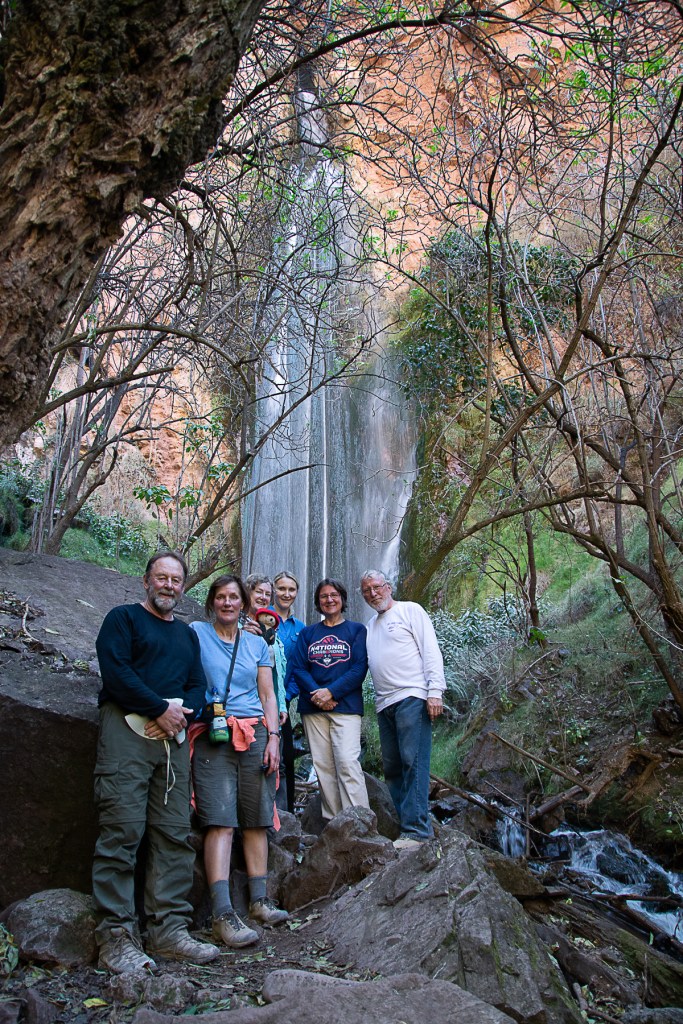
We spent some time in Cusco getting to know our fellow Quarry Trail hikers. Al and I were the only Americans. Greg and Sharon were world travelers from Australia. Maureen, the oldest of our bunch carried a Paddington Bear stuffed toy everywhere. She was writing a children’s story about Paddington’s return to his homeland in deepest, darkest Peru and needed photos of his journey. The five of us were between 59 and 65. The remaining hiker was the speed demon known as Ingrid, a super-fit 29 year-old physician. But fortunately, a very kind and patient super-fit 29 year-old physician.
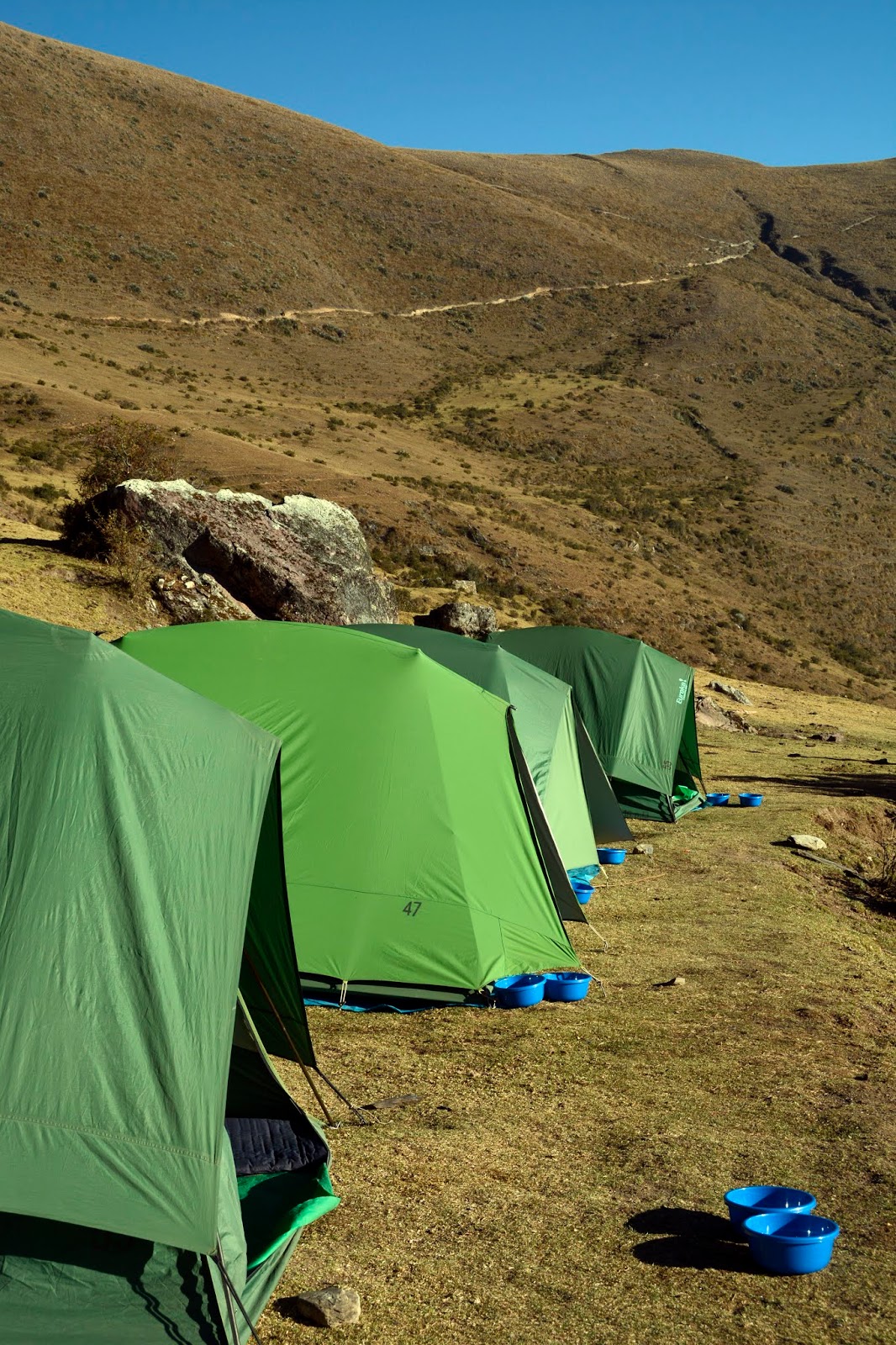
Our small group of hikers was supported by 2 guides, 2 cooks, a few horsemen, and the horses that carried our tents, sleeping bags, food, cooking supplies, the port-a-potty tent, and other necessities.
Paulo and Tina, our two local guides, assured us that one of them would always be in front, making sure we didn’t get lost. The other would be behind, making sure we didn’t lose anyone.
Tina laughed, “We have been doing this for years and haven’t lost anyone yet.”
“We’ll leave early in the morning for Ollantaytambo” Paulo said, “The bus will take us to the trailhead. The first day is a warm-up. Easy peasy. Don’t worry, the trail is rolly-rolly Inca flat.”
Paulo was a master of alternative facts.
He continued, “You’ll need trekking poles.”
We resisted. “Too much to carry,” I said, “I’ve already got camera gear, water… and besides they’ll interfere with my photography.”
Paulo insisted, “You’ll need trekking poles.”
We continued to push back. Greg said, “I’ve never used them before, why now?”
“You need trekking poles. You can rent them for five dollars for the whole hike.”
In the end we all decided to humor him. This turned out to be a very good decision. They helped somewhat on the climb, but were indispensable on the descent.
The next morning we set out, full of optimism and confidence. We rode the bus to Ollantayantambo, about 2000 feet below Cusco—a mere 9000 feet above sea level.
We were eager to start our adventure.
Before we were done, we would hike 18 miles over three days, gain a mile of altitude, and reach the Paccaqasa and the Kuychicassa Passes, both well over 14,000 feet above sea level.
The top of the world.
Our destination.
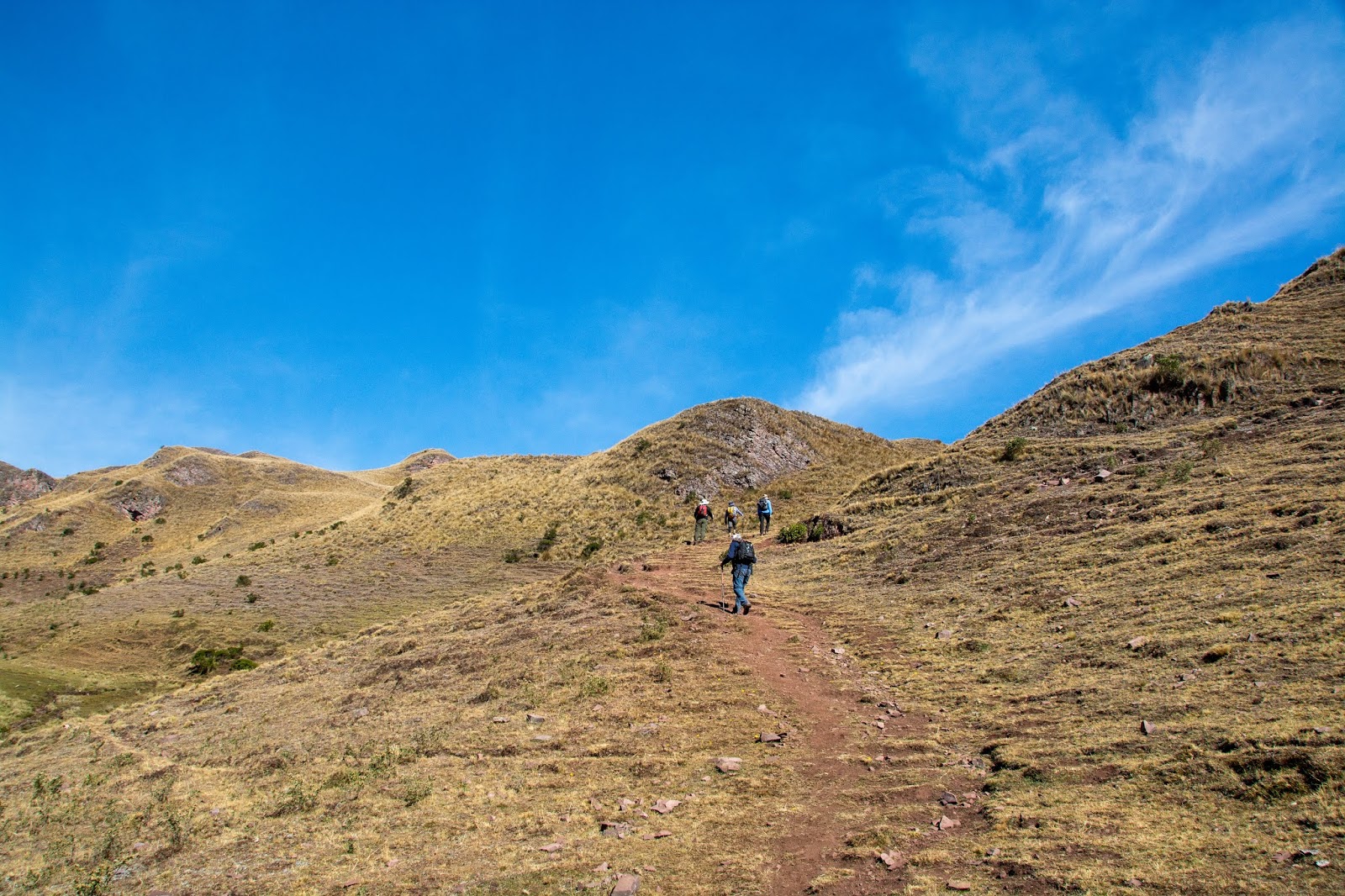
First hour. Hmmm… this is steep, but no worries. Paulo said this is just the warm up. Surely, it will get easier soon.
Second hour: Well, ok, it is still steep, huff… puff… but this is the easy day.
Third hour: More huffing and puffing. Lots more. Easy Peasy? Jeez Louise…what will tomorrow be like? Is this even possible?
I began to wonder if Paulo and Gina knew what they were doing taking a group of aging baby-boomers high into the mountains. What would happen if we couldn’t do it?
Fourth hour: Gasping… “Al, who’s stupid idea was this?” Raising one eyebrow, he just stared at me.
And so the morning continued. Step… huff. Step… puff. You get the idea. Like I said, the Andes are big. REALLY. BIG. I was huffing and puffing. Fighting the doubts. Trying to ignore the screaming voices of my twin internal critics, Agnes and Agatha, as they took turns nagging me mercilessly. “What were you thinking?” “Do you know how old you are?” “Why didn’t you train for this?” “You’ll never make it.” “What a moron!”
Those voices are the worst.
We stopped for lunch, but I couldn’t eat. I felt nauseous — maybe from the exertion, maybe the altitude. I rested in the grass and didn’t think I’d ever get up again. But the call came and we set off.
“Paulo,” I asked, “What happens if someone can’t make it?”
“Everyone will make it,” he replied, “you have to.”
“But, what if they can’t? Do they ride up on one of the horses?”
“No, the horses are needed to carry all the gear. They can’t carry people too.”
“But what if someone REALLY can’t do it?”
“I suppose they’d have to send a helicopter in.” He said, but rapidly added, “That’s never happened.”
I did not want to be the first. It sounded expensive... and humiliating.
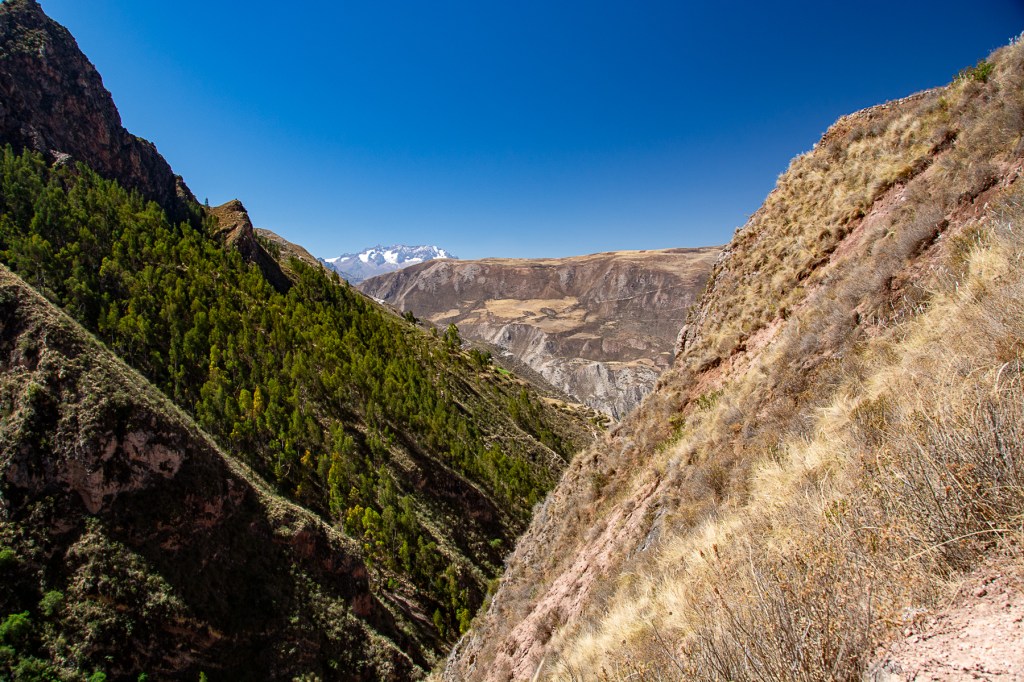
The afternoon was much like the morning. The trekking poles were helpful and I found a bit of a rhythm. No one spoke much; breathing was hard enough. After 7 hours, 4 miles and a 3,500 foot elevation gain, we finally arrived at our campsite. We had definitely earned our dinner. The cooks and horsemen had arrived well ahead of us with all the gear, set up camp and prepared a miraculous dinner of grilled fresh fish, avocado salad, and chica morada, a sweet and tangy purple corn punch. The six of us commiserated about our fatigue, expressed our gratitude for the cooks, the guides, and the horses, and shared our awe of the mountains, but at 8:30 p.m.,we were more than ready to sleep. .
It was already dark. Pitch dark. And quiet. And cold. There were no towns in sight, no lights other than our flashlights, no noise other than the wind. It was just us and the universe. For the first time I saw the crystal clear night sky as it was in the beginning, a sight that preceded human sight.
The Milky Way galaxy is no vague concept. It is not a picture in a textbook. It is a brilliant river of light that stretches across and dominates the sky. Much like we do, the Incas named constellations, but they also named the dark spots in that sparkling band of stars. Paulo showed us the frog, the snake, the llama. We were tiny specks in the universe looking billions of years back into time and into the infinity of space.
Bone-tired tiny specks.
At 5 am the next morning, we were awakened by the guides knocking on our tent. Time to get up!
Really?
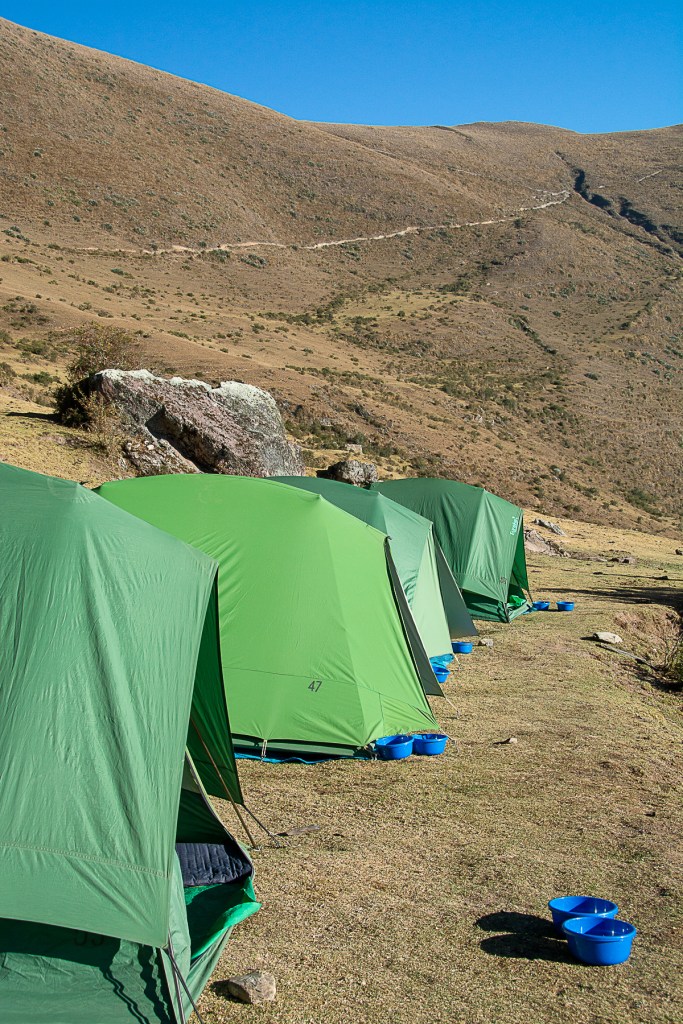
The cooks placed blue basins of warm water for washing up and two cups of coca tea outside our tent to help us get going.
To our surprise, we never lost cell phone signal on that trek and we decided to call Ellen to let her know that we were doing fine. We told her that we had experienced no significant effects from the altitude, to which she replied, “Great. But really you two need to be more careful and plan better.”
“We’re fine. Don’t worry about us,” I said, thinking that she was already treating us like incompetent old people. Is that how she sees us? Is that what we are?
Nah.
“Everyone ready?” called Paulo as we began the second day of our journey.
“Is the hike easier today?” I asked him.
“Rolly-rolly Inca Flat” he replied smiling benevolently.
Ingrid laughed, “I don’t think the word flat applies to the Andes, but we’ll make it.”
“Easy for you to say,” I replied, secretly hoping I would not be the first person in recorded history be lifted out by helicopter.
We fell into our usual pattern—Ingrid, the 29 year-old speed demon in front, the rest of us, single file behind. Maureen was usually the last in the line. If we got too far ahead, we would stop and rest to wait for her. As soon as she arrived we set out again.
She was a good sport, definitely an intrepid hiker but eventually, she exclaimed, “I really appreciate that you wait for me, but I am the only one who never gets to rest.” She had a point. We tried to do better.
At such high elevations, the vegetation was limited to grasses, already dried to shades of gold and brown by the summer sun and wind. The grasses blew gently against the massive red and black rock formations. The sky was cobalt blue and we were excited to see the very rare Andean Condor, but we saw no tourists, and little wildlife.
Al observed, “I am so glad we took the Quarry Trail. We have the Andes to ourselves. So much better than following a line of people on the Inca Trail.”
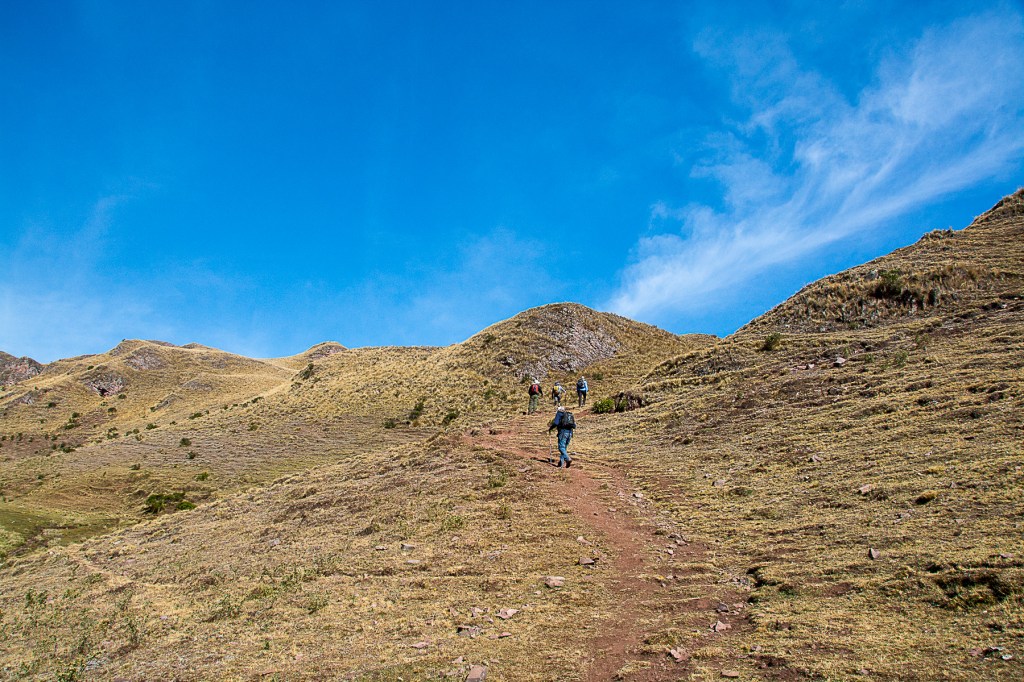
Trying to concentrate on anything other than my aching legs and labored breathing, I focused on what was right in front of me—Al’s back and the red clay trail ahead.
One step.
Another.
Agnes and Agatha were bellyaching about me again.
“Agatha, can you believe she’s still upright? She can hardly breathe.”
I snarled, “Will you shut up, Agnes? I am fine! ”
One step.
Another.
Agnes and Agatha were relentless.
Left.
Right.
“Agnes, I know, what is wrong with her anyway? Is is time to call for the helicopter?”
One step.
Another.
I was in no mood for this. “Agatha, can’t you find someone else to harass? I need a helicopter”
Left.
Right.
They spoke to me in unison. “You are crazy.”
“Ok, both of you. JUST STOP! It can’t be much farther.”
And then…
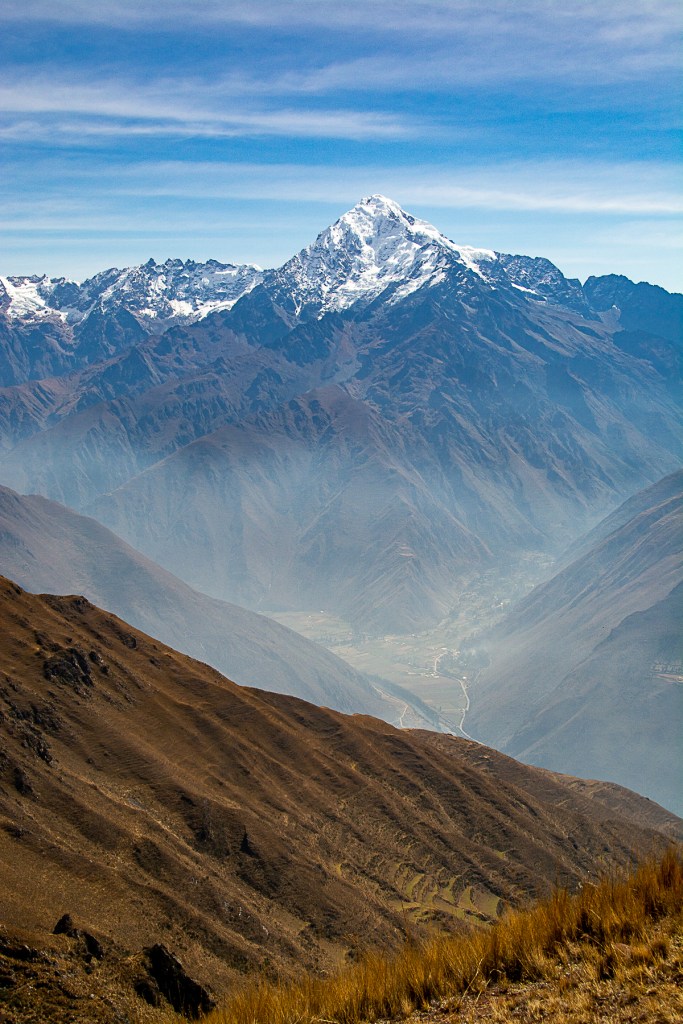
…heaven revealed herself.
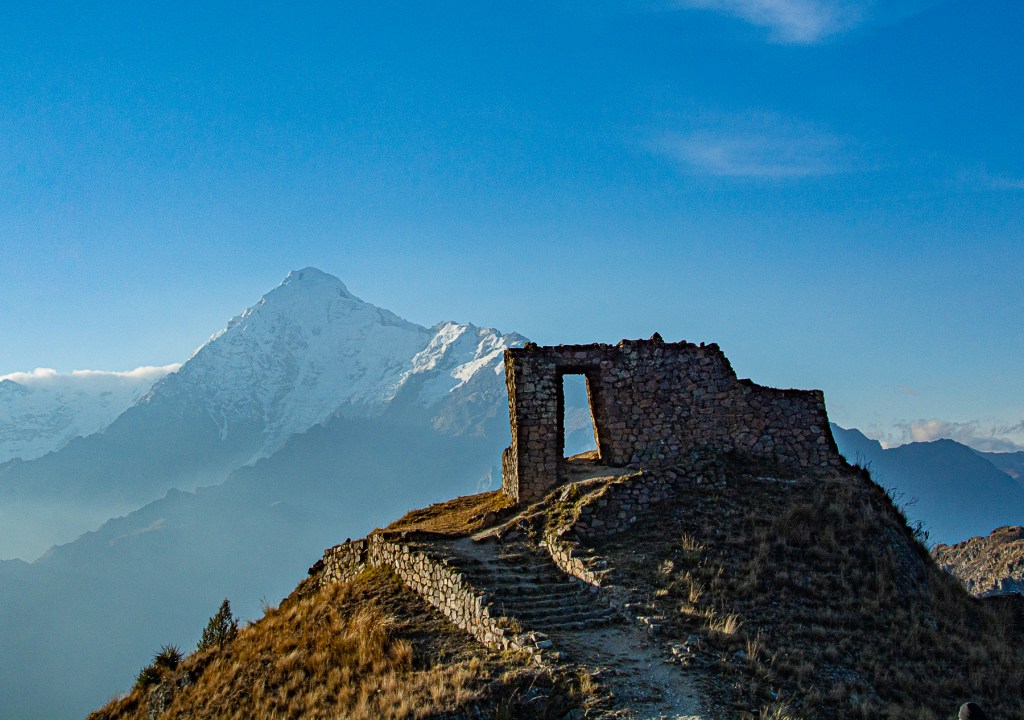
The view opened up and we we saw the towering mountain, Willka Weqe, standing sentinel over the Sacred Valley. Willka Weqe, Quechuan for “Holy Tears” evoked both holy tears and holy laughter as I experienced a joy that emanated from the deepest part of my exhausted being.
Hugging each other, joyously dancing, our band of hikers reveled in the glory of Willka Weque and our collective triumph. We had reached the Puccaqasa Pass at 14,340 feet above sea level.
This was definitely the highlight of our trek, but not the high point. Eventually we needed to move on. With new found energy, we continued on the rolly-rolly Inca flats to the highest point on our trek, the Kuychicassa Pass, 14,600 ft above sea level. From that pinnacle, we began our descent to the floor of the Sacred Valley.
Willka Weqe stayed with us for the remainder of our journey. Never again out of sight, always protecting and nourishing the Sacred Valley.
And us.
Paulo was absolutely right about those trekking poles. The descending side of the loop seemed somehow steeper than the ascent and while the downward force of gravity no longer took my breath away, it did steal my balance. Even with those trekking poles for stability, I slipped and fell a couple of times, landing hard and sliding down the mountain in what I now call the “sit down school of hiking.” My feet slid forward in my boots, painfully jamming my toes against the protective leather. My journey ended with a very bruised bottom, purple toes, a couple missing toenails, but, above all, intense exhilaration and pride.
Once safely off the trail, I called Ellen and let her know that we lived to tell the tale of our successful, if somewhat ill-prepared, hike. She was glad to hear we were alive but took one more opportunity to remind us about the importance of doing the research and planning. “You ARE a scientist, after all,” she said. She had a point.
At the end of our journey, our group gathered in a pizza place in Ollantaytambo. Drinking beers and Pisco sours, we reflected on our sore muscles, our doubts, our collective victory, and our shared story.
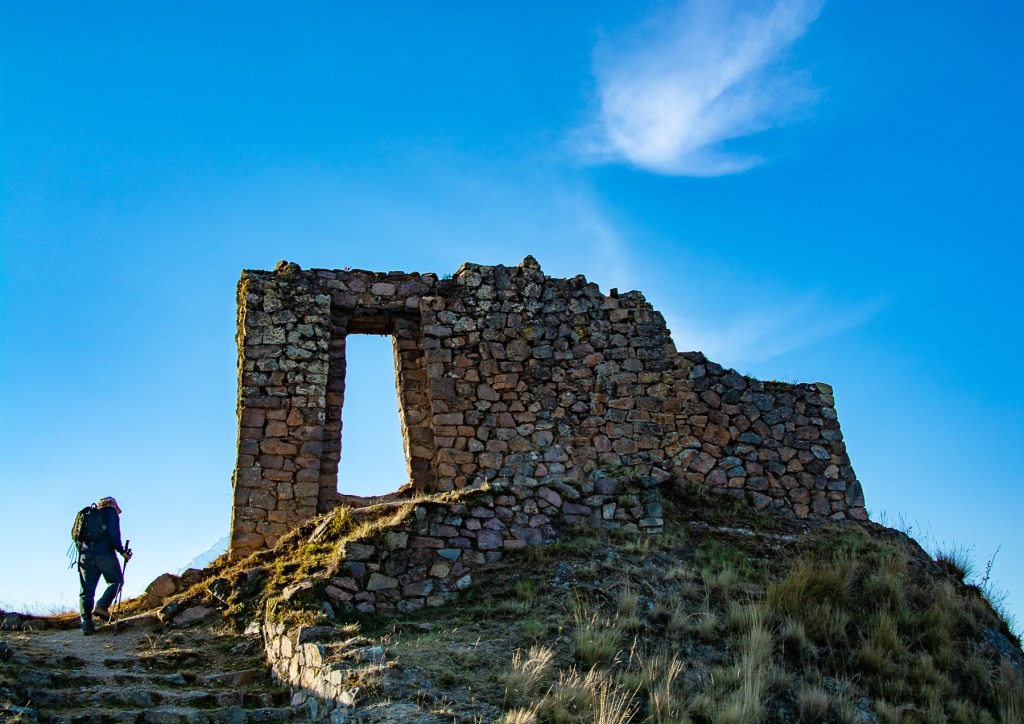
Al and I had hoped to hike into Machu Picchu on the Inca Trail, but the Quarry Trail gave us a different experience of the Andes, one that revealed the raw wildness of this craggy landscape. While our hike did not lead to the famous sungate, Inti Punku, at Machu Picchu, we did find our own sungate, framing our Holy Tears, not famous, but all the more intimate for its isolation.
People talk about travel as life-changing and transformative, broadening global understanding with knowledge of other people and cultures. That is a big part of it.
But, my greatest transformations occur when I am most out of my comfort zone, when I am faced with the real possibility of failure, when I have no choice but to find a way forward. The Andes reminded me that discomfort, doubts and challenges are a small price to pay for those unexpected, unanticipated moments of transcendence. That night sky. That mountain. That valley.
Send comments
(include email if you want a response)